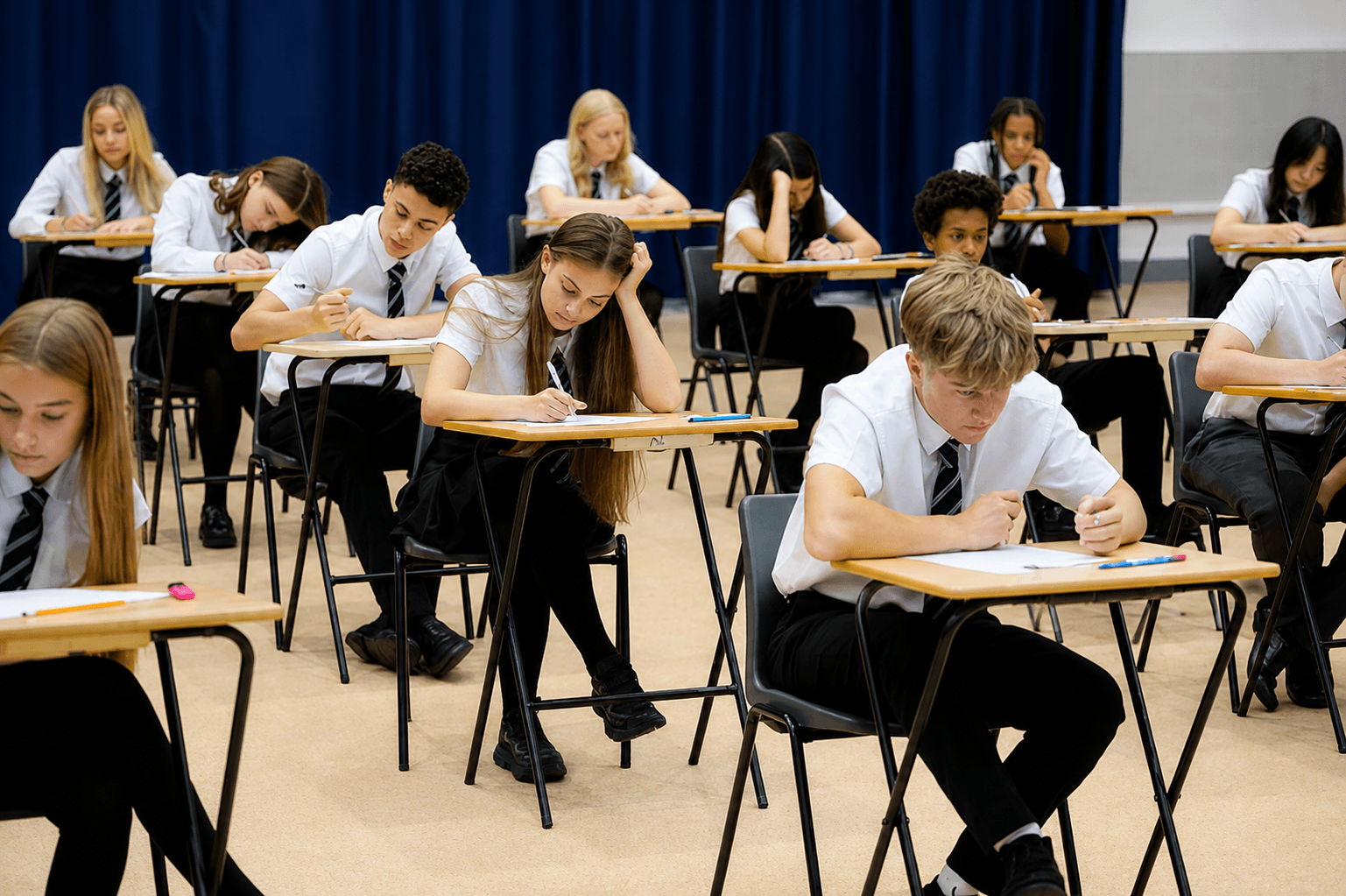
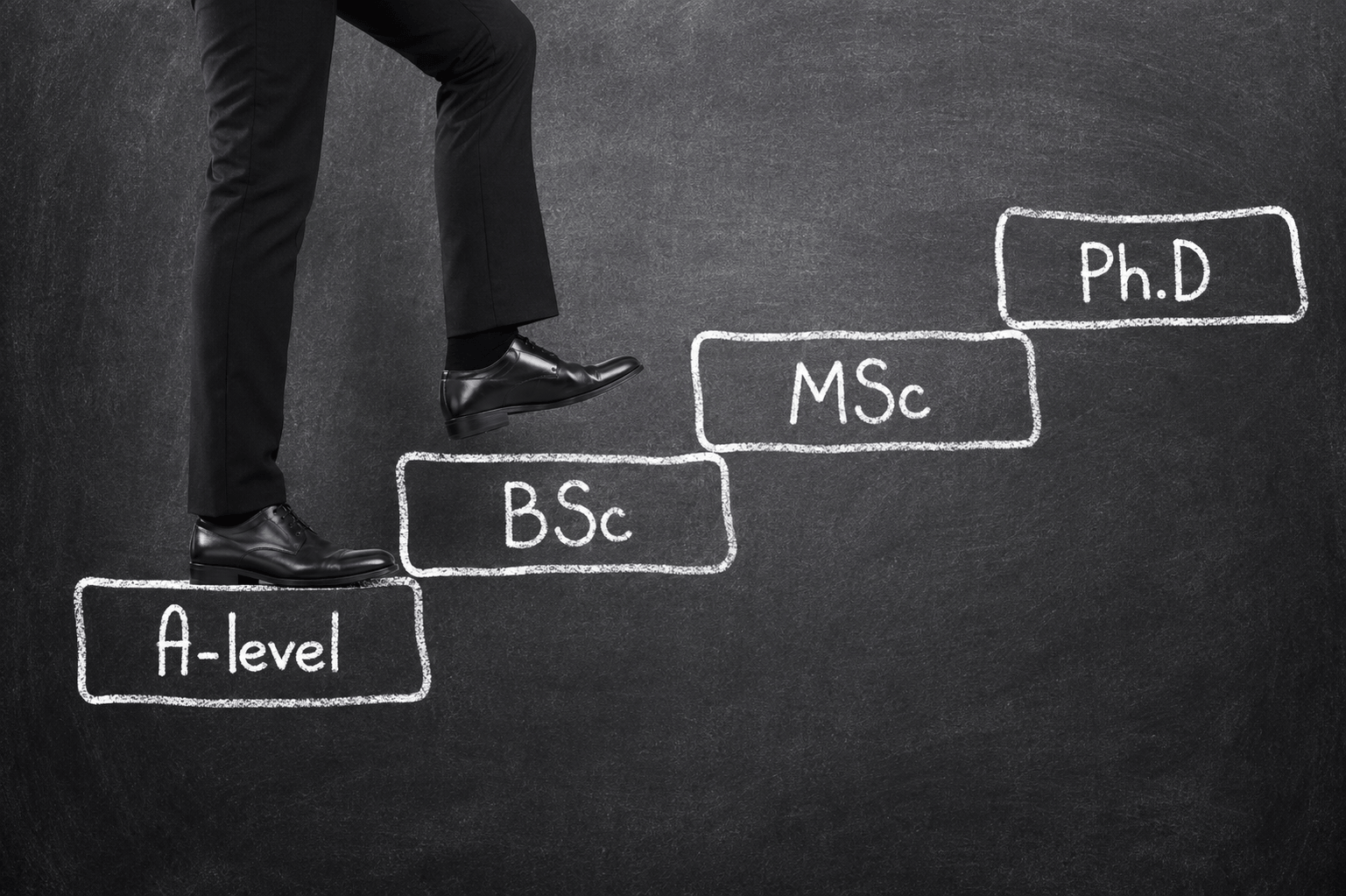
The UK education system delivers learning across four major stages: primary education, secondary education, further education, and higher education.
Full-time education is compulsory for all children aged 5 to 18 (or age 16 for leaving school, provided they remain in some form of training or further education until 18)
The school system splits sharply along funding and admissions lines:
| Stage | Age Range | Corresponding School Years | Key Assessments / Qualifications |
|---|---|---|---|
| Early Years Foundation | 3–5 years old | Nursery & Reception | Baseline Observations |
| Primary Education | 5–11 years old | Year 1 to Year 6 | Key Stage 1 & 2 SATs |
| Secondary Education | 11–16 years old | Year 7 to Year 11 | GCSEs or National 5s (Scotland) |
| Further Education (FE) | 16–18 years old | Year 12 & Year 13 (Sixth Form) | A-Levels, BTECs, T-Levels, or IB |
| Higher Education (HE) | 18+ years old | University / Degree level | Bachelor’s, Master’s, or PhD Degrees |
Children begin their education in informal, play-based environments like nurseries or preschools. At age 4, they enter Reception, which acts as a transition year into formal primary schooling.
Primary education covers foundational subjects and is categorized into two main blocks known as Key Stages:
Testing Stages:
Exams are paper-based and usually taken at the candidate’s current school, but they are marked by the senior school the student is applying to.
Students advance to secondary school to complete their compulsory general education:
In some independent schools students sit The Common Entrance (CE) exam which is a standardized set of assessments used primarily to evaluate students for admission.CE is managed by Independent Schools Examination Board (ISEB) https://www.iseb.co.uk/
Core subjects:
Optional subjects:
Humanities
Modern & Ancient Languages
Creative & Performing Arts
Technology & Computing
Business & Social Sciences
Vocational & Technical Awards
Many schools offer practical, coursework-heavy equivalents (like BTECs or Cambridge Nationals) alongside traditional GCSEs.
The mandatory core subjects include English, Mathematics, and Science. Students round out their personal schedules by picking optional subjects, ranging from modern foreign languages to humanities and the arts.
At the end of Year 11, students take their final exams to earn a GCSE (General Certificate of Secondary Education). Many international schools or private institutions opt for the IGCSE (International GCSE), which mirrors the rigor of the domestic qualification but features global contexts.
GCSE students typically take 8 to 12 subjects, with English, Math, and Science being strictly mandatory.
Upon completing GCSEs, students choose a pathway based on their long-term professional or academic ambitions:
Core Subjects: Sciences (Biology, Chemistry, Physics), Mathematics, and Humanities (History, Geography).
Electives: Over 85 subjects are available, including Law, Psychology, Media Studies, and Modern Foreign Languages.
University Requisites: Competitive degrees (e.g., Medicine, Engineering) require specific combinations.
The Two-Year Structure
Grading Scale
A-Levels are graded on a scale from (A*) down to E:
A levels qualifications are the main stepping stone for university admissions in the UK.
When applying to UK universities via the UCAS system, A-Level grades are translated into UCAS Tariff points. For example, an (A*) is worth 56 points, an A is 48, and a B is 40. Top-tier universities (like Oxford or Cambridge) frequently demand straight A grades or higher (e.g., A* A A).
A-Level Grade UCAS Points
Common Grade Combinations
To get a sense of how these build up for university applications, here is what standard grade combinations are worth:
AS-Levels: If you took AS-Levels, they count for less. For example, an A grade is worth 20 points, and a C is worth 12 points.
Offers vs. Points: Some universities offer places based on specific grades (e.g., “BBB”) while others ask for a total point threshold (e.g., “120 points”). Points offers give you more flexibility to mix and match grades.
You can calculate your exact total or look up different qualifications using the official
Not All Universities Use the Tariff: Always verify entry requirements directly on individual university course pages, as some top-tier institutions still require specific A-Level grades regardless of your total points.
The International Baccalaureate (IB) Diploma Programme is a globally recognized, holistic curriculum for students aged 16 to 19.
Instead of specializing in three or four subjects (as is typical for A-levels), IB students study six subjects simultaneously over two years:
Candidates must choose one subject from each of the following groups:
The IB Core
Beyond the six subjects, the IB requires three unique core elements that develop critical thinking and practical experience:
Grading and Assessment
Each of the 6 subjects is graded on a scale of 1 to 7, for a maximum of 42 points. Up to 3 bonus points can be awarded for strong performance in the Extended Essay and TOK, bringing the absolute maximum total score to 45 points.
School Options: You can find IB programs in roughly 120+ schools across the UK, including prestigious independent boarding schools and select state-funded sixth-form colleges.
University Recognition: All UK universities, including Oxford and Cambridge, have formal IB entry requirements. Most top-tier universities equate a strong IB score (typically 38 to 40+ points) to top A-level grades (AAA to AAA).

Vocational Route
Designed for practical, career-oriented training, students can complete BTECs, T-Levels, or vocational NVQ qualifications in specific fields like business, healthcare, or computing.
T Levels
T Levels are two-year technical qualifications for 16-to-19-year-olds in England, equivalent in size to three A Levels. They combine 80% classroom learning with a mandatory 45-day (minimum 315 hours) industry placement. T Levels are designed by employers to prepare students for skilled employment, apprenticeships, or higher education.
Higher Education (Most students are 18, and universities treat 16-year-olds as minors, which requires extra-legal safeguarding, parental consent, and guardianship) Higher education is optional and takes place primarily at independent universities.
After further education, students transition to higher education at a university or specialist college. This tier separates into two primary layers of study:
Undergraduate Degree Classifications: Upon completion, degrees are awarded with Honours. Classifications range from First-Class (the highest) down to Third-Class:
Popular Bachelor’s Subjects
Key Types of Postgraduate Degrees:
Entry Requirements for Postgraduate:
A UK university placement is an integrated, year-long, paid work experience taken between the second and final year of university. Also called a “sandwich year” or “year in industry,” it allows to pause the studies to work full-time in the chosen field before graduating. It counts as part of a degree. Students have assigned academic tutors, may complete coursework during the year, and earn credits toward your final classification. Tuition Fees: students are still enrolled at university but pay a heavily reduced tuition fee (usually around 20% of the standard rate).
Securing a UK university placement requires navigating a highly competitive application landscape, managed centrally via UCAS (Universities and Colleges Admissions Service).
International applicants or students who do not meet direct entry criteria can take advantage of pathway courses at university. These preparatory programs, such as international foundation years, bridge local academic gaps and boost English proficiency, ensuring a smooth transition into full degree courses.
Universities have dedicated career services to help their students find openings, but students are responsible for applying, interviewing, and securing the role just like a standard job.
University Pathway Courses are preparatory programs designed to help students—often international or adult learners—meet the academic and English language requirements needed to enter a bachelor’s or master’s degree. Taking typically 3 to 12 months, these foundational stepping stones bridge the gap between your current qualifications and university standards.
Common Types of Pathway Courses:
Andrew Sutherland, the principal of Sutherland Education, has firm beliefs about how international students should be looked after when coming to study in the UK. “Sutherland Education is a care organisation” says Andrew.
So you’ve finished your exams. What a relief! All those months of work and the recent weeks of last-minute study to make sure your brain was as crammed full of information as possible. Not to mention the sweat-inducing stress of sitting scribbling in